A medical answering service handles patient calls for doctors, physicians, and hospitals around the clock, routing urgent calls to on-call providers and scheduling non-urgent appointments per your protocols. Ambs Call Center is a HIPAA-compliant medical answering service with live, US-based agents, verified by annual third-party HIPAA audits, and has answered calls for practices and hospitals since 1932.
Our HIPAA compliant answering service benefits your providers, staff, and patients. Here's how:

Here's how your providers will benefit from our medical answering service:
Attach notes, listen to call recordings, and track follow-ups using our portal
Customize call routing to minimize disruptions
Message doctors using HIPAA-compliant, secure texting
.png?width=150&height=150&name=doctor%20that%20is%20smiling%20from%20using%20a%20doctor%20answering%20service%20(1).png)
Here's how your staff will benefit from our medical call center:
View notes left by providers and add notes of your own to calls through our portal
Only escalate urgent medical calls after-hours
Update on-call calendar instantly using our portal

Here's how your patients will benefit from our healthcare answering service:
Increased satisfaction from award-winning medical call center agents
Increased safety through fast, reliable escalation protocols
Receive expert patient care from your now-focused staff
Since we started answering calls on behalf of physicians in Michigan in 1932
Annual third-party HIPAA-compliance audits ensures your PHI is always secure
Unlike some "US-Based" services, we handle your calls exclusively in the USA
We have no plans on stopping now, so let us support your organization as it grows!
When you don't have a medical answering service (or if you have a poor medical answering service), your practice will face:
Wait times get longer on your phones preventing emergency medical calls from being escalated
A high call volume with no meaningful process for reaching doctors will leave your staff stressed
Your patients need you most after hours, especially in emergencies
Concerns about data breaches or mishandling sensitive information put both patients and providers on edge
Providers feel overworked from managing calls and patient expectations
Using Ambs Call Center's medical answering service, your healthcare organization or practice receives:
Your patients are happier when they get to speak to an answering service agent faster
Allow your medical staff to focus on patient care while we handle calls and emergencies
No matter when your patients call into your practice, we'll help them
We adhere to strict HIPAA-compliant measures, even auditing through a third-party, to keep your PHI secure
We handle patient inquiries and emergencies 24/7, allowing providers to get the rest they need
When you use a professional HIPAA-compliant medical answering service like Ambs Call Center, you can expect to receive the following benefits:
Appointment Scheduling
After Hours Call Support
Secure Integrations
Huge Cost Savings
Happier Patients
Medical answering service pricing comes in two models, and the difference matters more than the headline rate.
Per-call billing charges a flat monthly fee for a set number of calls. It looks simple, but the definition of a "call" is where practices get caught. Wrong numbers, hang-ups, and someone asking what time you open usually count. So do texts, emails, faxes, and voicemails — even when nobody picks up. Ask any provider to define a billable call in writing before you compare plans.
Per-minute billing charges for the actual work time on each call. You pay for what you use, and it's now the industry standard. A two-minute appointment reschedule costs less than a ten-minute triage call, which is usually the fairer outcome for a practice with mixed call types.
From our 2026 industry analysis, per-call plans average $149 to $275 a month for a practice taking around 50 calls, rising to $1,075 to $1,175 at 500 calls. Per-minute plans average $1.75 to $2.25 per minute.
Call volume and when it lands — 40 calls spread across the day costs differently from 40 between 5pm and 8pm. How complex the calls are, since appointment scheduling, prescription triage, and on-call dispatch each take different handle time. The hours you need covered: after-hours only, daytime overflow, or full 24/7. How many decision branches your script has. Whether messages push into your EMR or practice management system. And whether you need bilingual coverage.
Ask how short calls, spam, hold time, patch time, holidays, and overages are billed. Those line items are where two quotes stop being comparable. Send a recent call sample and compare the same workload across providers.
Is your front desk staff too busy juggling patient check-ins to handle calls during the day? If so, use our medical call center as an overflow answering service! With the flip of a switch, our medical answering service will kick in and calm the chaos of your office. That way, your front office team will be able to provide their undivided attention to what matters most: providing the highest level of patient care. We also offer a dedicated appointment scheduling service to help fill your calendar around the clock.
Patients don't stop calling when your office closes. A medical after hours answering service means every one of those calls reaches a live person who follows your protocol — not a voicemail box nobody checks until morning.
We screen routine calls from emergencies using the rules you set, then reach your on-call provider the way they prefer: phone, text, secure messaging apps, or any of our other message delivery channels. Routine messages wait for the office. Urgent ones don't.
You decide what counts as urgent, who gets contacted, in what order, and what happens if nobody acknowledges. Update your on-call calendar yourself through the myAmbs portal whenever the rotation changes.
That's roughly 13% of the US population. If you don't have a bilingual medical answering service, you're turning many patients away—and not supporting the ones that are already with you. That's why we offer bilingual call answering services for healthcare providers everywhere across the US! We train our Spanish-speaking medical call center agents to use neutral accents so they can speak to all Spanish-speaking patients! Stop letting language barriers hinder your organization's growth and start supporting your Spanish callers today!
Hear for yourself how our award-winning medical call center agents will help your patients with a real, unrehearsed call recording. This is an audit call by CAM-X, a third-party company that evaluates answering services based on the quality of a call. Our agents are not informed beforehand of these test calls. And as it is a test call, it is HIPAA-compliant.
This is one of many calls that's earned us an Award of Excellence.
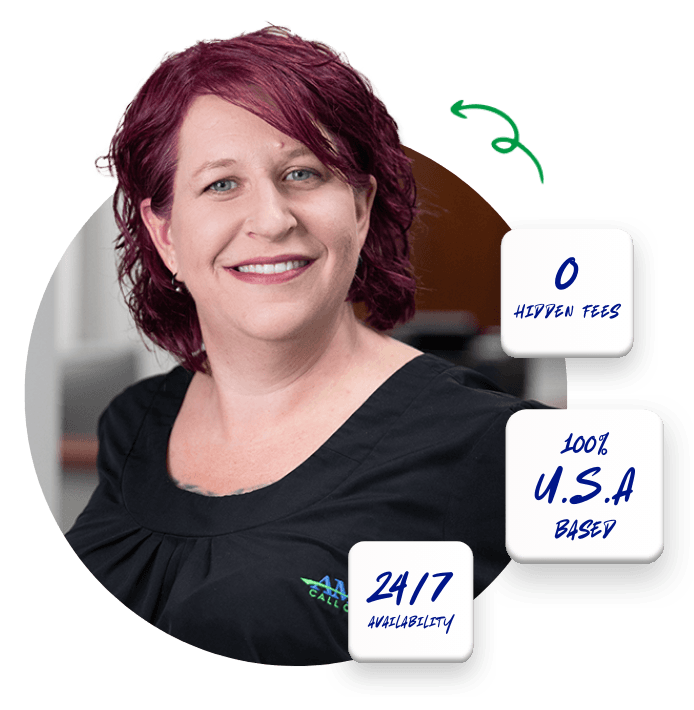
It's a really fast and straightforward process. We usually tell our clients that our onboarding process takes less than 5 business days. In this time we’ll have you fully up and running with a medical answering service for your healthcare organization—it's part of our proven process.
Discuss the needs of your practice and how we can help you improve your processes.
We'll ensure calls are programmed to be escalated and handled exactly how you want.
We'll begin helping your patients and providers with our award winning medical answering service.
These are a few questions we get asked often by first-time clients in healthcare. Don’t find your question here? Reach out to us to speak to one of our experts today!
A medical answering service, sometimes known as a doctor answering service or physician answering service, is a way for your medical practice to ensure a seamless connection with your patients, doctors, and other medical professionals. Here, the answering service acts as the go-between for medical professionals; scheduling appointments, referring patients to their departments, and patching the triage nurse (or on-call) for emergencies.
With a medical answering service, you can be sure your patients receive prompt, professional care and your doctors are reached appropriately at any time of day. It's useful for medical practices of any size that want to ensure a secure, consistent, and professional communication 24/7.
While the general call flow provides a solid foundation, answering services can also be highly customized for the healthcare industry. As a call center that first starting handling patient calls in 1932, we're fully aware of what needs to go into a medical answering service to make a practice manager and a patient's life easier.
Our medical answering services can scale as high or low as you need. Our receptionists are always ready to handle multiple calls simultaneously, so your patients' experience is seamless.
We currently serve dozens of large healthcare organizations across the USA. When you sign up with us, you won't have to worry about hiring extra in-person staff and dealing with overtime pay, benefits, and more. We're available 24/7/365—even during weather emergencies, because we know how important it is to ensure that your patients can always reach you.
Yes! We take your patient health information’s (PHI) security seriously. Not only do we have HIPAA compliant secure texting and emailing between our answering service and your practice’s staff, we also conduct an annual third-party audit of our HIPAA compliance.
That’s fine! Our secure text messaging application, Startel Secure Messaging Plus, allows your doctors to receive text messages securely and, with one swipe, file the messages to show they’ve acknowledged the contents of the message. Want to use an app that you already use in your office? No problem! We also work and integrate with thousands of other apps—and we likely can connect to yours!
Most likely, yes! If the apps you use are found in our integrations page, then yes! In addition, we also have a HIPAA compliant API which can be used to exchange data in real-time. This allows to connect to thousands of your favorite apps, and some EMRs!
Patient happiness starts with how they feel when they call your doctor's office. Every phone call is a chance to make them feel better about their care. When patients call, they're often worried or scared. Your first words can calm them down or make them more upset. Good phone help makes patients trust your office more. Bad phone help makes them want to find a new doctor.
Having real people pick up the phone matters a lot. Patients hate getting stuck in phone menus that go on forever. They don't want to leave messages and wait hours for callbacks. When someone's sick, they want to talk to a person right away. That person should sound friendly and ready to help. Even if they can't solve the problem instantly, they can make the patient feel heard.
Quick responses save lives and keep patients happy. When someone calls about chest pain or trouble breathing, every second counts. Your phone team needs to know which problems need help right now. They should ask the right questions fast. "Are you having trouble breathing?" "Is there any chest pain?" "Are you bleeding a lot?" These simple questions help decide if someone needs an ambulance or can come in later.
Your phone team needs clear rules about urgent calls. Not every problem is an emergency, but some really are. Chest pain, breathing problems, heavy bleeding, and signs of stroke need help immediately. High fever, bad pain, or medication reactions might need same-day visits. Regular questions about appointments or test results can wait longer. Make a simple list your team can follow every time.
After-hours help keeps patients safe when your office is closed. People get sick at night, on weekends, and during holidays. Having someone available to talk helps them decide what to do. Should they go to the emergency room? Can they wait until tomorrow? Your night team should know when to send people to the ER and when to schedule morning appointments. This saves patients money and gets them the right level of care.
Patient privacy rules must be part of every phone conversation. Your team can't share medical details with just anyone. They need to check that they're talking to the right person first. Never leave detailed medical messages on voicemail where other people might hear. Instead, ask patients to call back or leave simple messages asking for return calls. Keep records of all phone conversations in case you need them later.
Connecting your phones to patient records makes everything work better. When patients call, your team should see their recent visits and current medicines. This helps them give better advice without making patients repeat everything. They can also see upcoming appointments and make changes if needed. Having all this information ready prevents mix-ups and saves time for everyone.
Checking how well your phone team does their job helps patients get consistent care. Listen to recorded calls sometimes to see what's working well and what needs work. Are your team members friendly? Do they get the right information? Do they explain things clearly? Patients notice when call handlers sound rushed or don't seem to care. They also appreciate when staff take extra time to help them understand things.
Busy times need extra phone coverage so patients don't get frustrated with long waits. Monday mornings, after holidays, and during flu season bring lots of calls. Having backup help during these times means no patient gets ignored. Your extra team members should know the same rules and have access to the same information as your regular staff. This keeps the quality of care the same no matter when patients call.
Medicine-related calls need special care because mistakes can hurt people. Your team should know how to handle prescription refills and questions about side effects. They need clear rules about which medicine problems need immediate attention from a doctor. Never give medical advice over the phone, but do know when to get clinical staff involved quickly. Write down exactly what patients say about medicine reactions or problems.
Booking appointments involves more than just finding open time slots. Good phone handlers help patients know what to expect during their visits. They explain what to bring, how to prepare, and what the visit might cost. They can explain insurance rules and office policies before the appointment day. Follow-up calls to remind patients about visits and preparation requirements help visits go smoothly and reduce no-shows.
Getting feedback from patients about their phone experience helps you improve over time. Ask them how they felt about calling your office. Did someone pick up quickly? Were their questions handled completely? Did they feel listened to? This feedback shows patterns that might mean you need more training or system changes. Happy patients often mention specific staff members who helped them a lot, which creates chances to recognize good work.
Technology tools like automatic call routing and patient portals can help, but they shouldn't replace human contact entirely. Some patients like texting for simple questions or appointment reminders. Others prefer checking test results online instead of calling. However, complex medical questions and emotional support still need real people. The trick is giving patients multiple ways to reach you while making sure someone knowledgeable is always there for important situations.
Measuring success means tracking both how well your phone system works and how happy patients are. Watch how fast calls get picked up and how many patients get callbacks when promised. See how often urgent problems get handled the right way. Ask patients specific questions about their phone experience, not just general satisfaction with your office. Look for trends that show whether changes in your phone handling are making patients happier over time.
Good patient phone communication pays for itself in many ways. Happy patients keep their appointments and follow treatment plans better. They tell friends and family good things about your office. They write positive online reviews that bring in new patients. Better phone handling also reduces staff stress by preventing frustrated patients and complaints about communication problems. Most importantly, good phone triage and patient guidance leads to better health outcomes, which is what healthcare is really about.
Yes. A medical answering service provides 24/7 after-hours coverage, answering patient calls at night, on weekends, and on holidays. Ambs Call Center routes urgent calls to your on-call physician and takes non-urgent messages to your practice's protocol, so patients always reach a live person.
Pamela Pfaff
Practice Manager at Harper Bariatric Med Institute
Rhonda Hardy,
Office Manager at Mid Michigan Ear Nose & Throat
We integrate with hundreds of secure texting platforms that are HIPAA-compliant. Here are just a few that our clients in healthcare love:
Whether you’re new to the world of healthcare communications or looking to learn more on how to improve your practice’s communication, our learning center is the place for you. Relevant, informative content designed to improve the practice manager’s work life.
Healthcare practices face constant call volume — appointment requests, prescription inquiries, billing questions, and urgent patient needs all come through the same line. Our automated medical answering service triages and routes calls intelligently, so patients get fast, accurate responses while your clinical staff stays focused on care. Automation handles the predictable calls; a live agent takes over the moment a call needs judgment. Our workflows are built to support HIPAA compliance at every step.
AI distinguishes between routine inquiries and urgent patient needs, escalating appropriately.
Patients get help 24/7, with on-call staff only contacted when truly necessary.
AI-assisted workflows are built to support your compliance requirements.
There is no better time to get an answering service than now. If you're already aware of the communication gaps your healthcare organization is facing, delaying the solution might only make things worse for patient care.
When you fill out the form here we'll show you how a medical answering service matters more than you think, why it may be what you need, and steps you can take to get started now.
See why thousands of healthcare organizations have chosen us to represent them since 1932!
Suzanne Alsko, Warren Family Physicians
Fill out the form below to receive pricing and more info on getting started—and no, we never spam.